

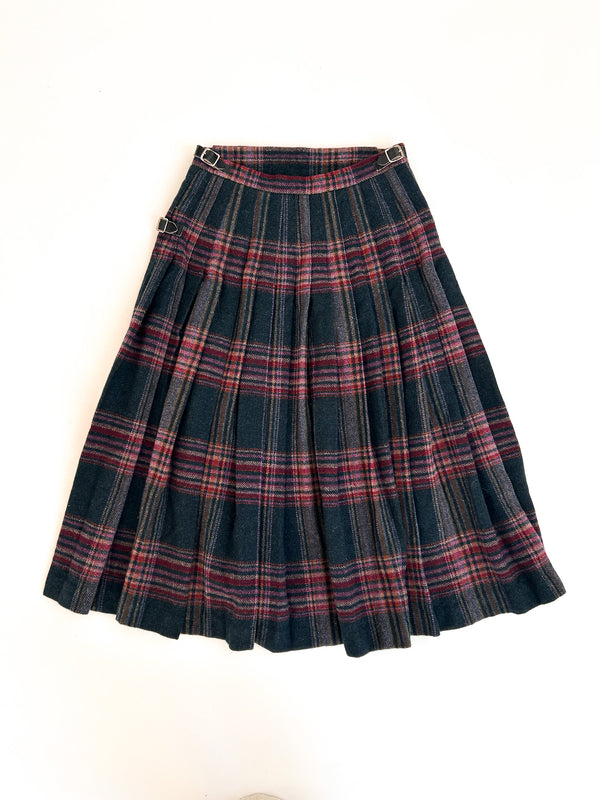
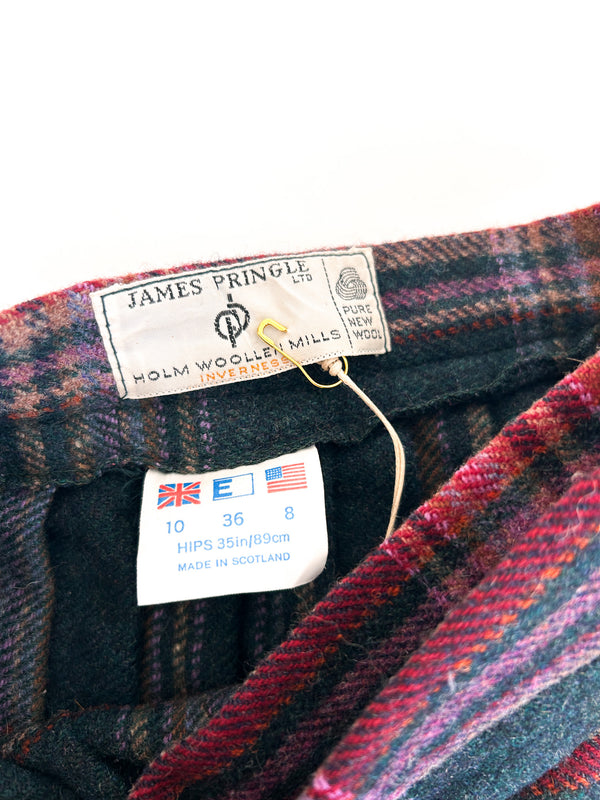
Vintage James Pringle Pure New Wool Tartan Kilt Skirt - Teal, W26"
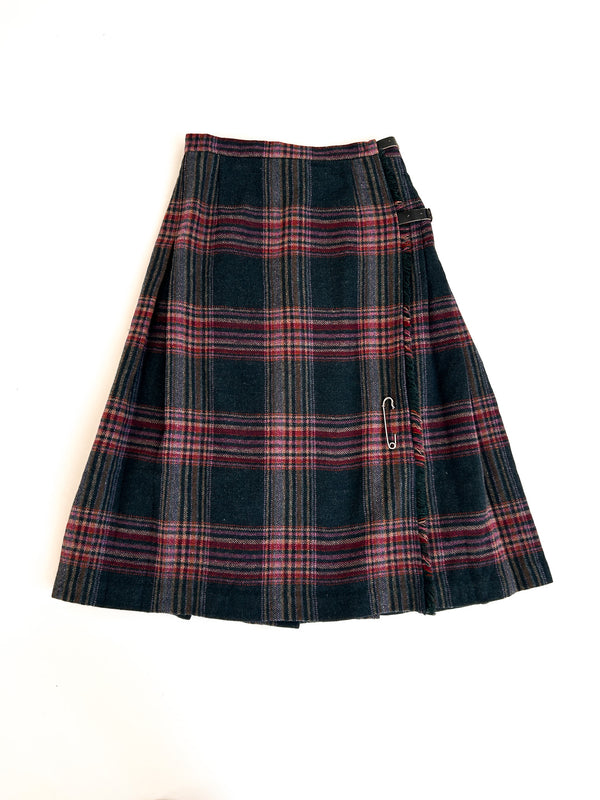
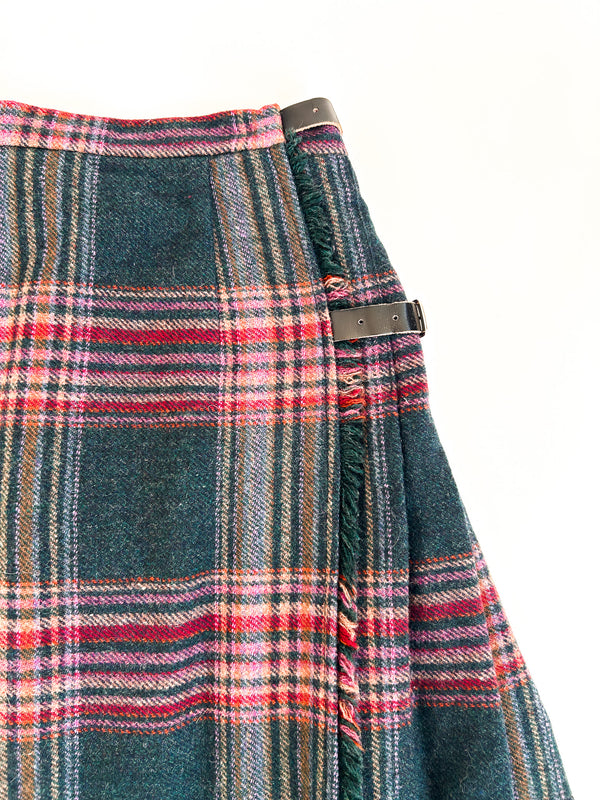
A wrap-around kilt skirt in dark teal green with plum, lavender and olive. The label reads James Pringle Ltd., Holm Woollen Mills, Inverness. 100% pure new wool, made in Scotland. Leather buckles, and the kilt pin is still with it.
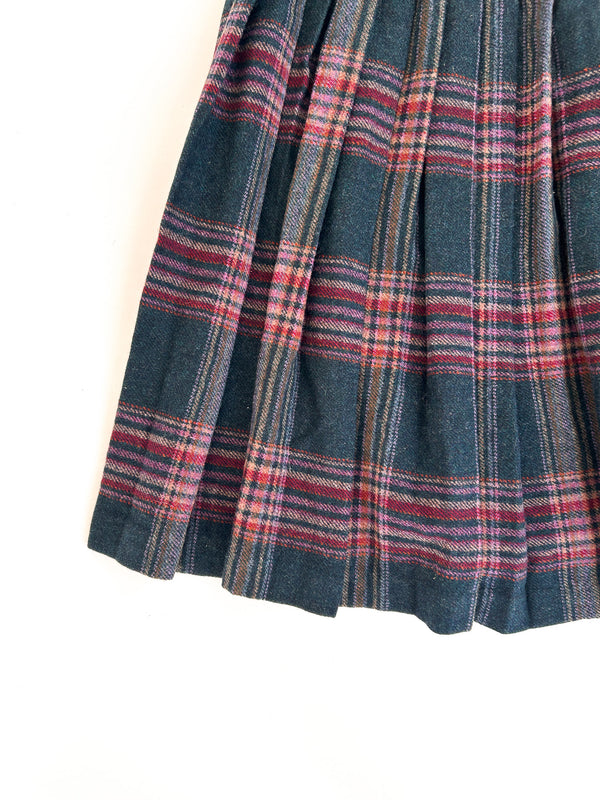
Flat, in inches: waist 26, hips 36, length 27. Note the ten inches between waist and hip - that is a full skirt rather than a straight one, so it swings instead of hanging. Twenty-seven inches lands below the knee on most people. The leather straps give a little range at the waist, which a zip would not.
Modern size: Waist 26 in.
Condition is excellent.
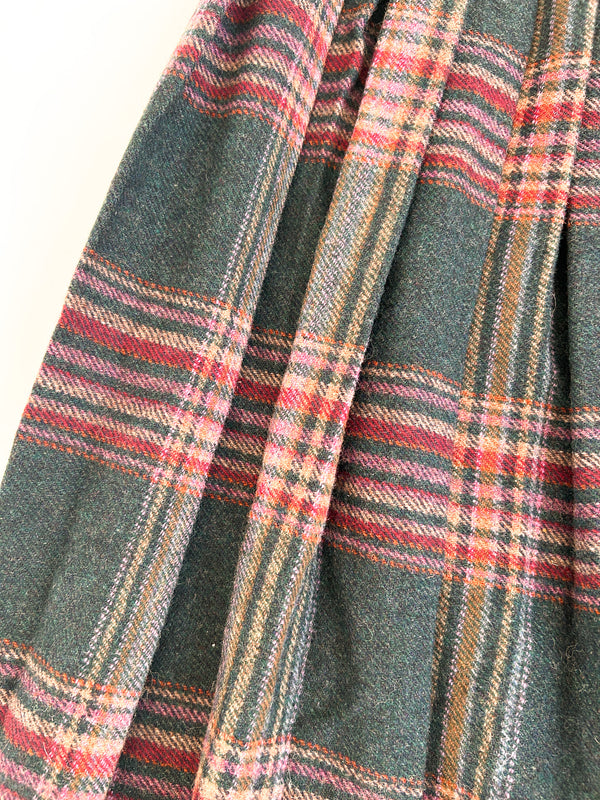
The colours are the reason to want it. Most tartans work in reds, blues, greens and black - plum and lavender are not traditional clan colours at all. This is a softer, later palette than a clan sett, and a great deal easier to wear than the ones that look like a rugby pitch. Teal, plum, lavender and olive is a combination somebody chose rather than inherited.
The label names the mill, not the shop, and the distinction matters. James Pringle Weavers became famous as a retailer - but Holm Woollen Mills is where the cloth was actually woven, and weaving continued at Inverness until near the end of the twentieth century before production moved to the Borders. A Holm Woollen Mills label is from the period when the mill was still a mill.
James Pringle invented the mill shop, and that is not an exaggeration. The family took over the Holm Mills site in the 1920s - a site that had been milling since the 1790s - and by the 1950s they were selling to the public. James Pringle, known as Hamish, inherited a textile business close to bankruptcy and turned it into a multi-million-pound one by doing something nobody had bothered with: letting people buy the cloth directly from the mill that wove it. The Holm Mills shop still draws around a hundred and fifty thousand visitors a year.
It is not Pringle of Scotland. The Hawick knitwear house - cashmere, argyle, founded 1815 - is an entirely separate company that happens to share the surname.
Pure new wool is a claim with teeth. It means wool spun straight from the fleece rather than reclaimed from old cloth. The alternative, shoddy, is wool pulled back out of worn garments and respun: shorter in the fibre, weaker, duller.
A kilt pin fastens nothing, incidentally. It hangs on the outer apron to weight it so the front does not lift.
One of one. Sold as found.
No returns - as is.
- Ships from Minneapolis, usually within 1–2 business days.
- Easy returns within 21 days of delivery.
- Questions? concierge@shopmille.com

You may also like