


Mille Trouvailles
MT-TR-187 · One of one
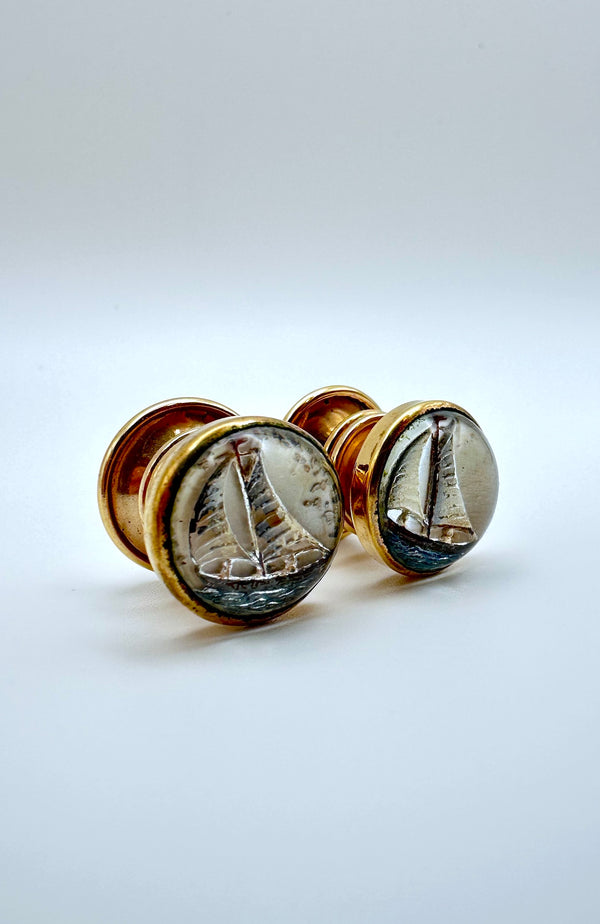
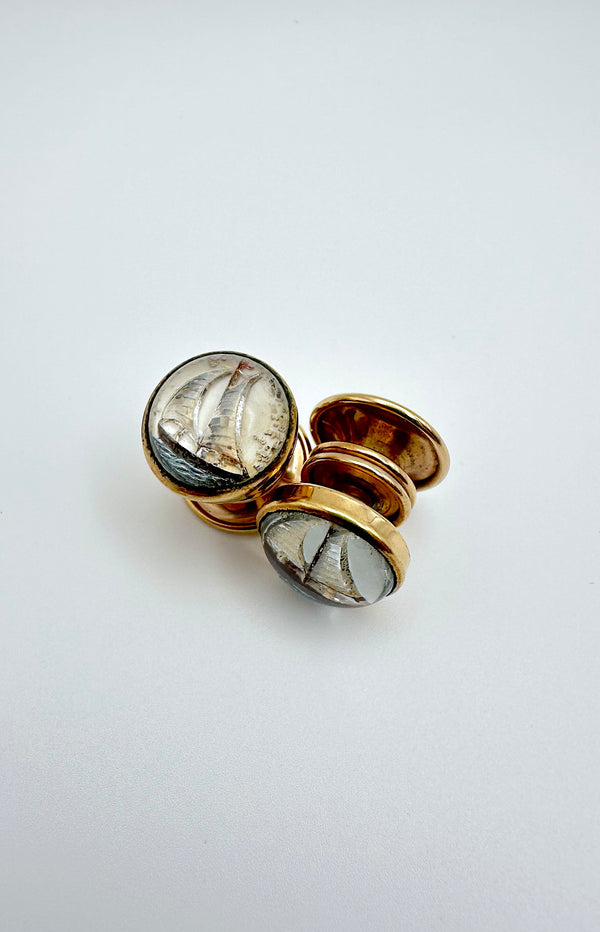
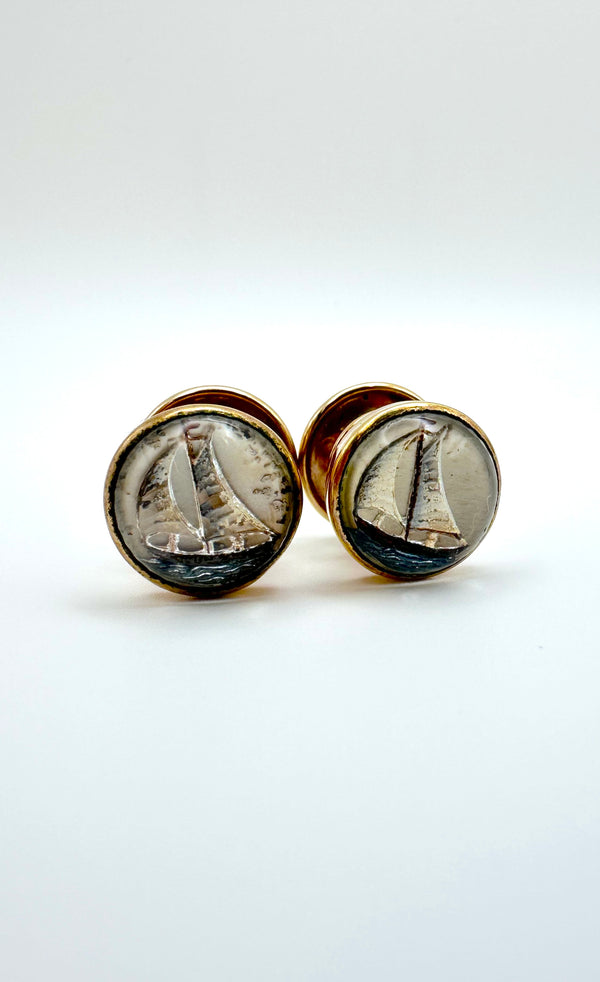
Vintage Essex Crystal Sailboat Cufflinks, Sta-Lokt 1/20 12K Gold-Filled - Reverse Intaglio
Sold as found · All vintage is final sale
That mark is why they still look like gold. Gold-filled is not plating - it is a layer of gold mechanically bonded to a base-metal core, and American law requires it to be at least one twentieth of the total weight. That makes it something like a hundred times thicker than electroplate. It is the reason hundred-year-old gold-filled still reads as gold while plated pieces from the same decade wore through to brass long ago. 1/20 is the weight fraction; 12K is the purity of the gold used.
Sta-Lokt is a pun, and a good one. It means stay locked. These are snap links: a small raised button releases them rather than a swivel bar, and you can see the post and button on the reverse. The trade dates Sta-Lokt to the 1920s.
The technique is the thing. A dome of rock crystal is carved into from the flat back, then painted from behind, then usually backed with mother of pearl. Looked at through the dome, the image floats - it has depth it should not have, and it shifts slightly as you turn it. Nothing else in jewellery does that.
And the name is wrong, which is the good part. These are called Essex crystals after William Essex, who was appointed enameller to Queen Victoria in 1839. He had nothing whatever to do with them. Collectors simply assumed that work this fine must be his, and the name stuck to a craft he never practised. The likelier originators are Emile Marius Pradier of Belgium around 1860 - who left the only known signed example - or Thomas Cook in England in the early 1860s, whose pupil Thomas Bean carried it on, and then Bean's son, and then his grandson.
Where these sit in that story. The English Victorian work is the high point of the craft, and by the 1920s the trade had spread to France and America and the quality was no longer what it had been. So a Sta-Lokt pair is American, and at the tail of the good period rather than its height.
The subject is period-correct. Men's reverse intaglios ran to racing horses, game birds, dogs and boats; women's to flowers and monograms. A sailboat belongs squarely in the first list.
The craft is now close to extinct. There are very few people left who can carve and paint one.
One of one. Sold as found.
No returns - as is.
Fabric: 1/20 12K gold-filled, with reverse intaglio rock crystal
- Ships from Minneapolis, usually within 1–2 business days.
- All vintage is final sale, sold as found.
- Questions? concierge@shopmille.com

You may also like