


Mille Trouvailles
MT-TR-198 · One of one
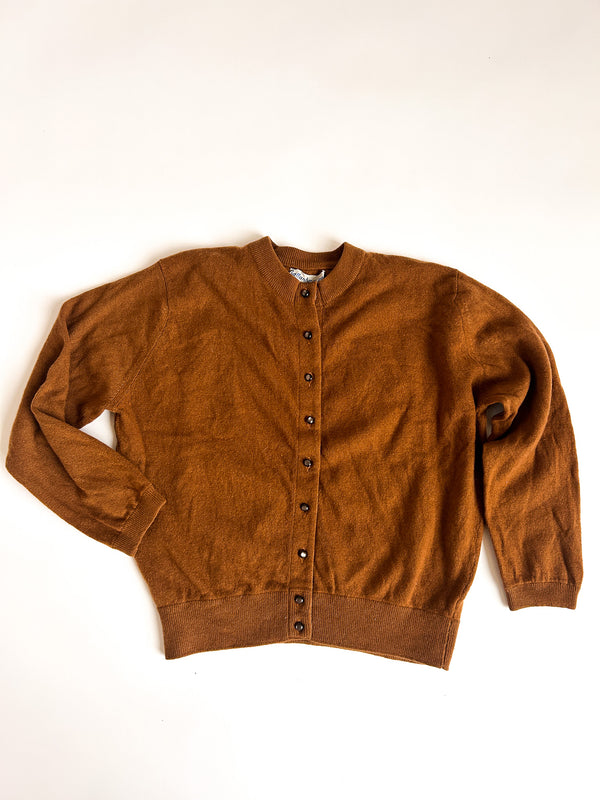
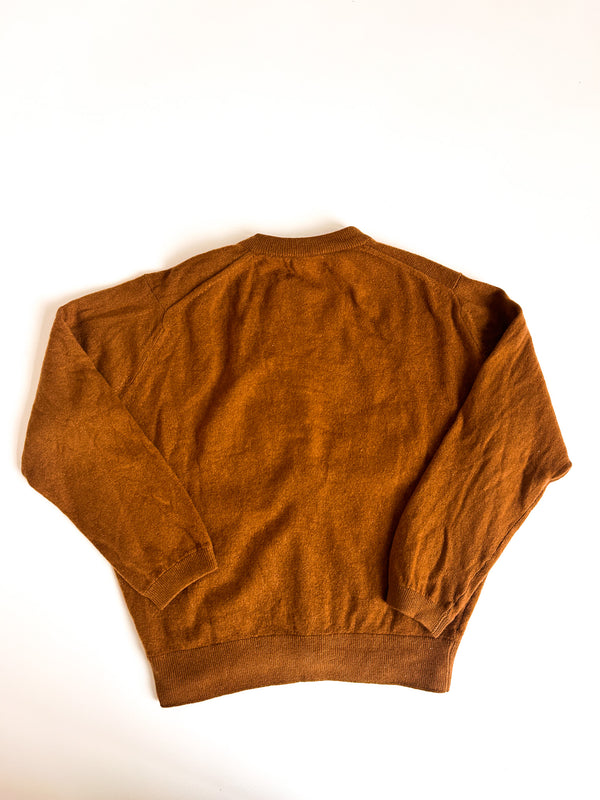
Vintage Ballantyne of Peebles Cashmere Cardigan Made in Scotland - Brown
Sold as found · All vintage is final sale
Measured flat: chest 36 in (pit to pit 18 in). Waist 24 in (12 in flat). Length 18 in. Shoulder 14 in. Sleeve 17 in.
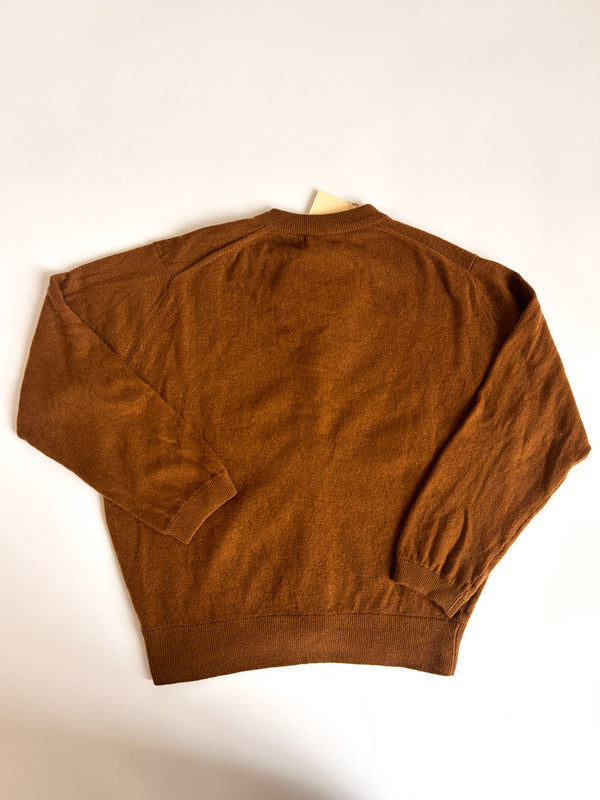
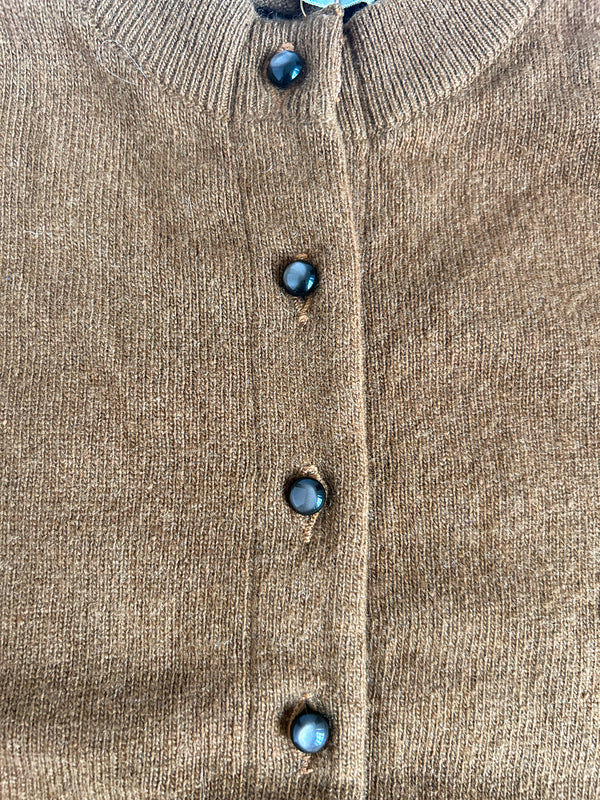
Condition: perfect. No moth, no thinning, no pulls, every button present.
Read the chest against the waist and you have the whole garment. Thirty-six inches at the chest down to twenty-four at the waist is twelve inches of shaping, and it is knitted in - stitches decreased through the ribcage and increased back out again, not a straight tube pulled in by a belt. Shaping a knit that way is slower than knitting straight, which is exactly why almost nothing does it. At eighteen inches long it finishes at the natural waist.
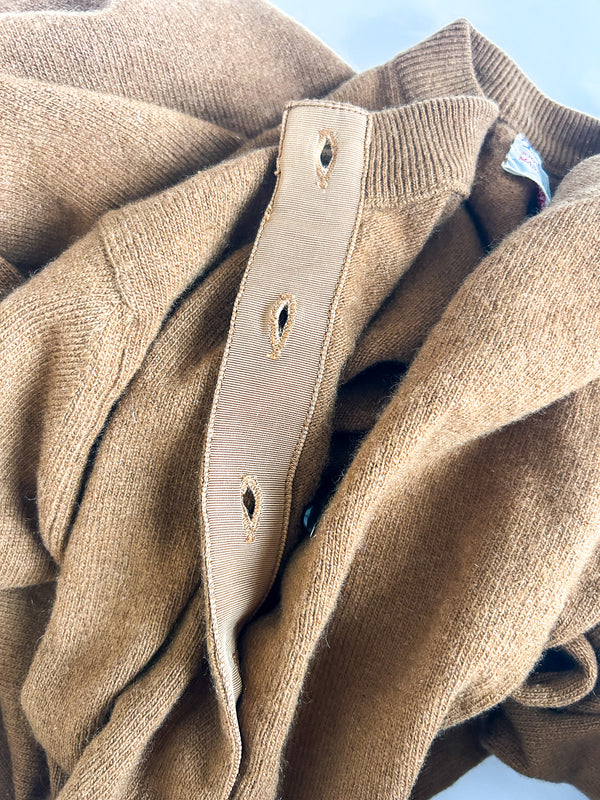
The grosgrain placket is the other detail, and it matters more than the word cashmere does. Grosgrain is a stiff ribbed ribbon, and here it is stitched up the inside of both button bands. Knitting stretches; a row of buttons and buttonholes is a row of stress points; and a cardigan without that ribbon goes wavy and gapes down the front within a few years. With it, the placket stays flat for decades. It is slow to do, completely invisible from outside, and essentially nothing made at ordinary prices has it. Two hidden, expensive decisions in one small cardigan.
The buttons are pearly and tonal, matched to the brown rather than contrasting, which is the quiet way to do it.
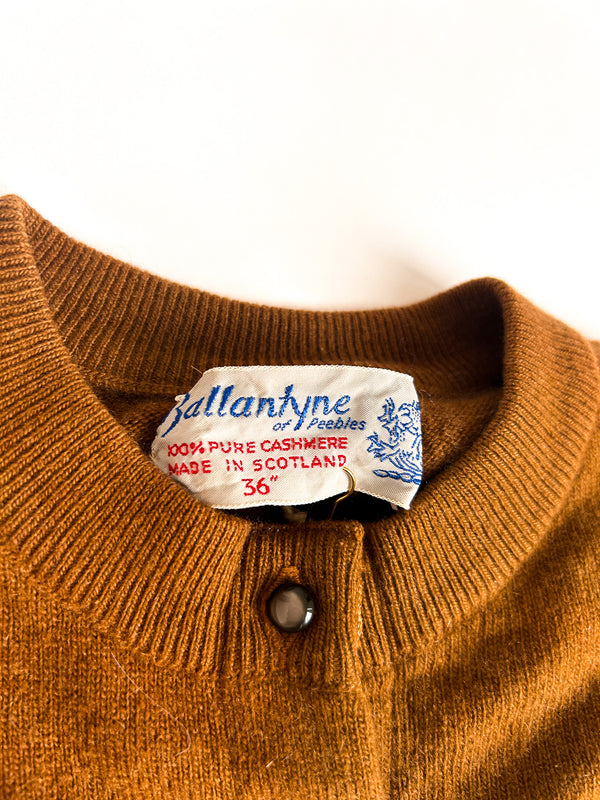
Ballantyne began knitting in 1921 with yarn it had left over. The family had been in Scottish Borders textiles for generations - D. Ballantyne & Co. was at March Street Mills in Peebles by 1883 - and when they moved into knitwear they started by making men's golf hose out of surplus yarn. From that they went to cashmere pullovers, and from there to being one of the two or three names that meant Scottish cashmere.
They are the house that made intarsia famous. The technique, developed there through the 1920s and 1930s, is what allows a diamond or argyll pattern to be knitted into the body of a garment rather than printed or embroidered on - each colour worked as its own panel, joined as it goes. It is slow, it cannot be done quickly by machine, and it is why a Ballantyne diamond looks the way it does.
And "of Peebles" is the part that dates it. The brand was bought by an Italian investment fund in 2004 and the original Scottish mill closed in 2013. A cardigan that names the Scottish town is from the mill, not from the brand that came after it.
100% cashmere. Hand wash cool or dry clean, dry flat.
Modern size: Fits like a modern Women's S or Men's XS.
One of one. Sold as found.
No returns - as is.
Fabric: 100% cashmere
- Ships from Minneapolis, usually within 1–2 business days.
- All vintage is final sale, sold as found.
- Questions? concierge@shopmille.com

You may also like