


Mille Trouvailles
MT-TR-194 · One of one
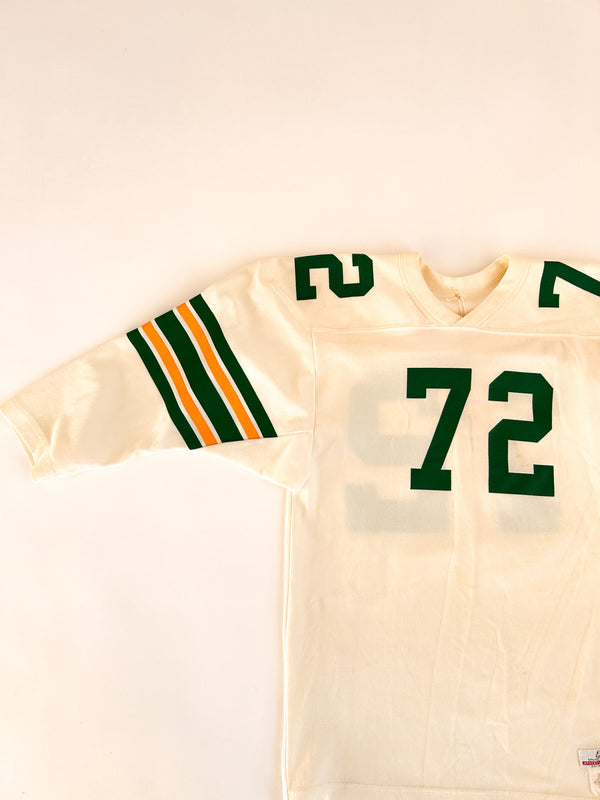
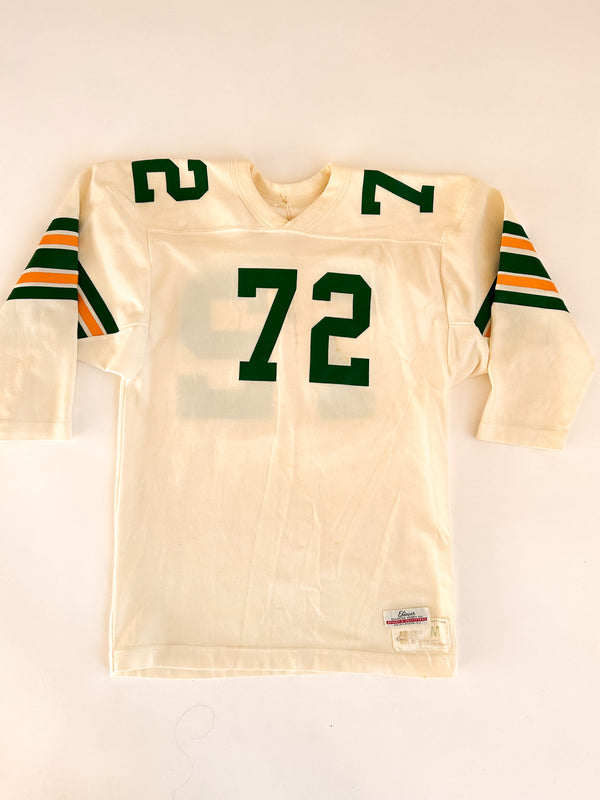
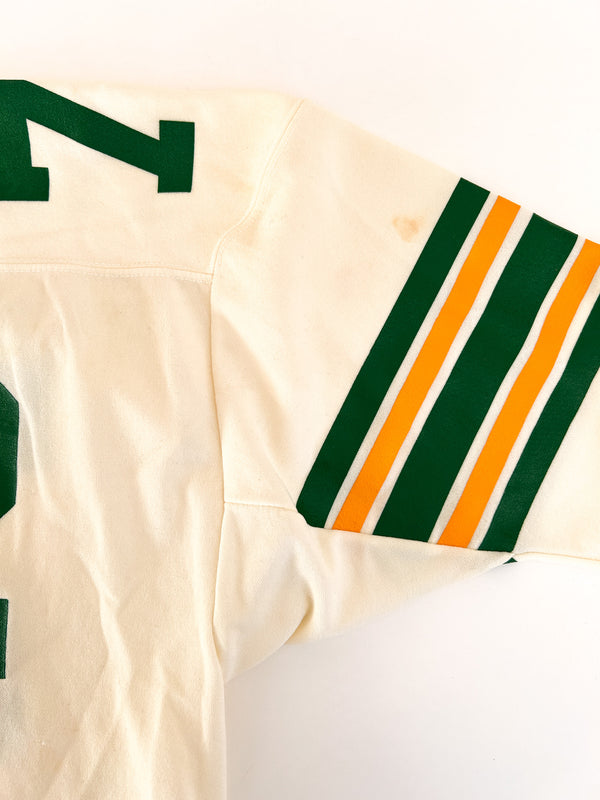
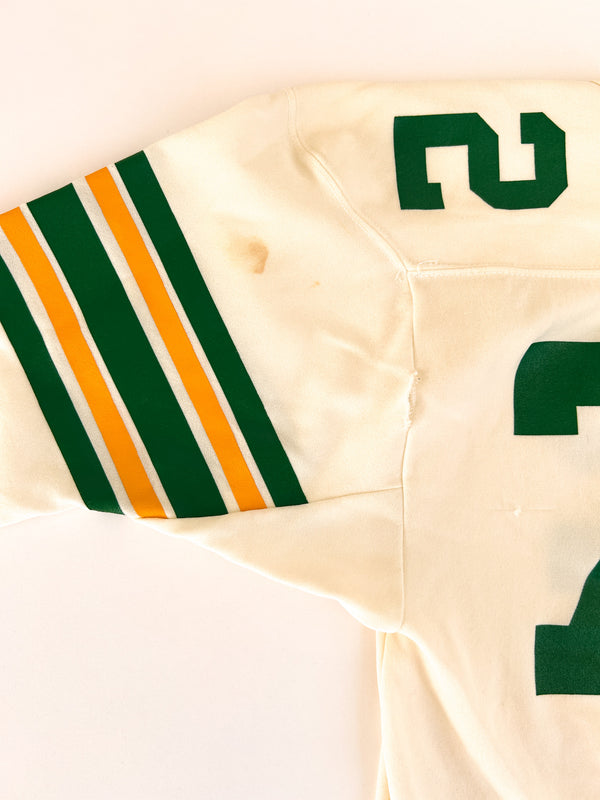
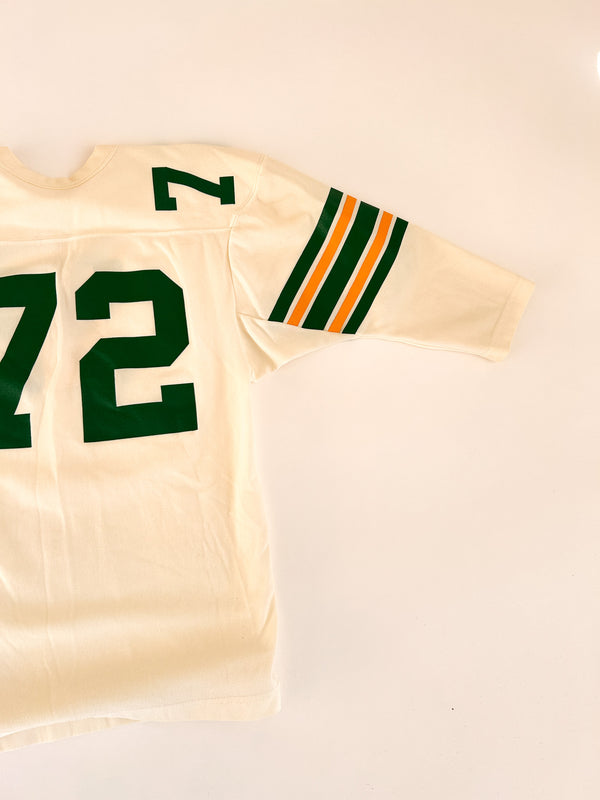
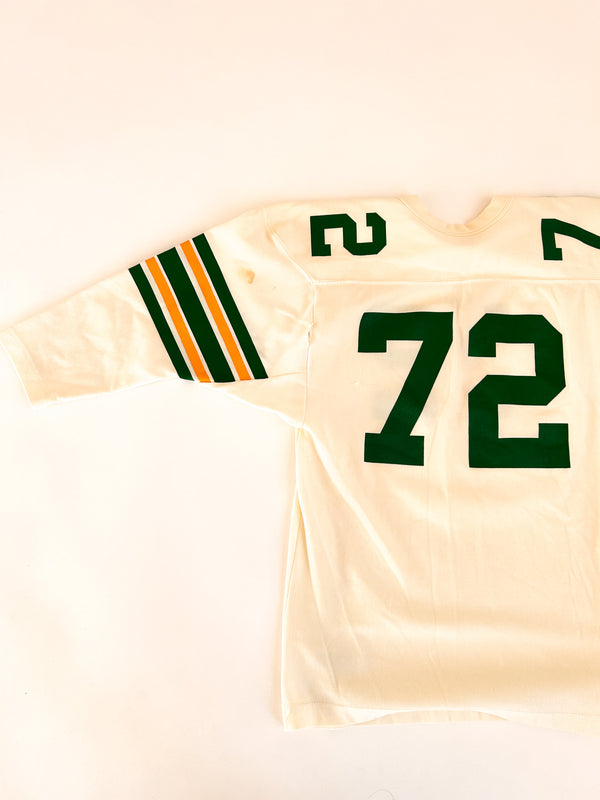
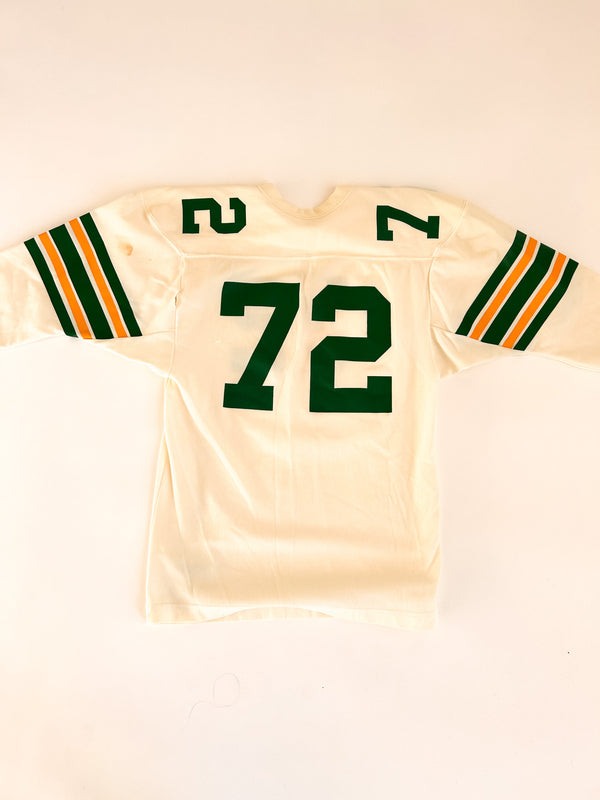
Vintage Russell Top Teams #72 Football Jersey, Efinger - Green and Orange
Sold as found · All vintage is final sale
Measured flat: chest 32 in (pit to pit 16 in). Length 26 in. Shoulder 19 in. Sleeve 14 in.
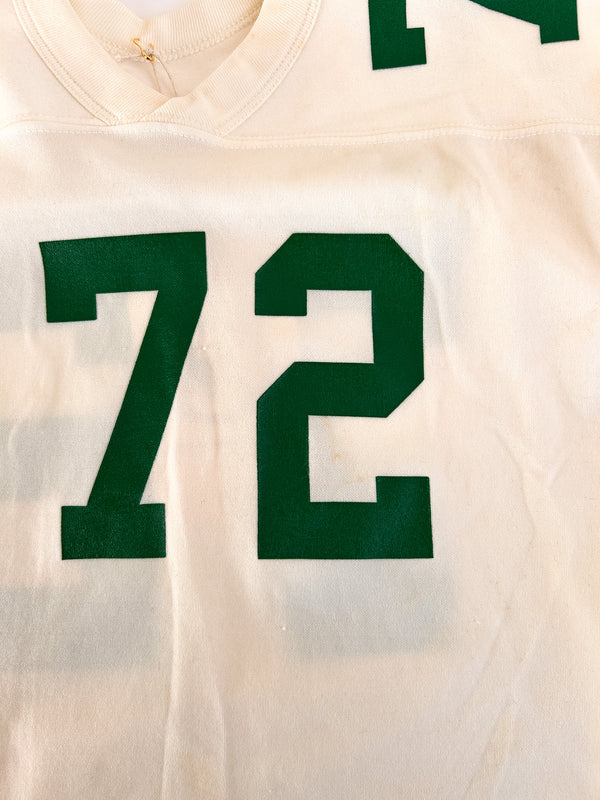
Condition: good, with a small faint stain on a sleeve. Nothing else of note.
No fibre content is legible on either tag. Football jerseys of this period were commonly durene cotton or a cotton-nylon knit.
A nineteen inch shoulder on a thirty-two inch chest is what a football jersey is. The body is cut deliberately narrow so there is nothing loose for an opponent to catch hold of, and the shoulders are cut wide to clear a set of pads. The sleeves stop at fourteen inches for the same reason. It is a garment built around equipment that is no longer in it, which is why one reads so strangely on a hanger and so well on a person.
The shoulder numbers are called TV numbers in the trade, and they exist for one practical reason: a chest number disappears under a raised arm or at the bottom of a pile, while a shoulder number can be read from the side and from above. Every number on a jersey is a separate cost to apply - so numbers in four places means a school ordered the fully specified jersey rather than the cheap one.
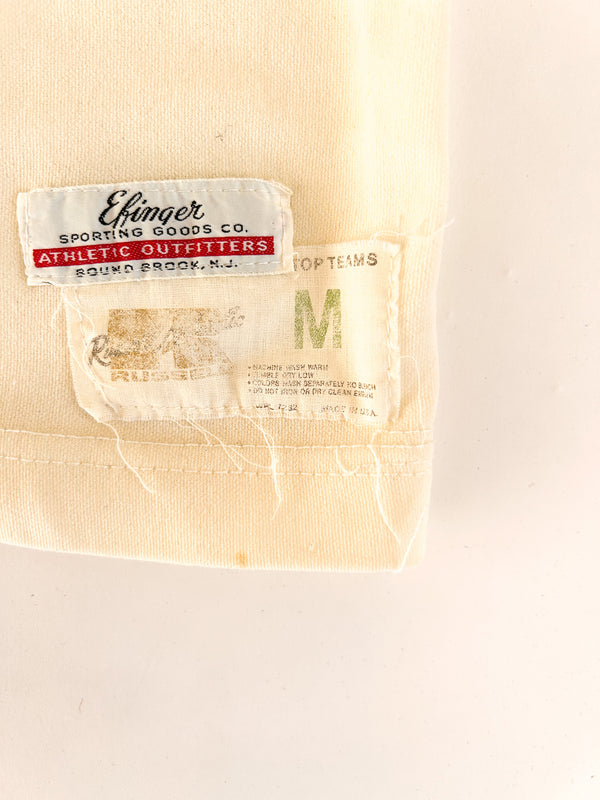
Two tags, two ends of the same transaction. Russell made it - Alexander City, Alabama, in business since 1902 and the maker of a great deal of American team kit. Efinger sold it. Between the manufacturer in the Deep South and the outfitter in New Jersey sits a school that ordered a squad's worth of jerseys, and both ends of that chain are still stitched into the garment. Made in USA matters here - Russell, like everyone else, moved a great deal of production offshore in time, so a jersey sewn in America belongs to the earlier part of the run.
Efinger is not the player and not the team - it is the shop. Efinger Sporting Goods of Bound Brook, New Jersey outfitted schools, colleges, leagues and institutions, and stayed in business until it closed in 2016. The phrase on the tag, athletic outfitters, is how that trade described itself before anybody said "team dealer": a firm that took an order from a school, had the jerseys made, lettered and numbered them, and delivered them by the dozen.
The dealer tag does not name the team, but it shows the jersey was ordered by an institution within reach of one New Jersey shop - not bought off a rack. This was made for somebody who was going to play in it, and a 72 is a lineman's number. Nothing on the jersey names the school.
Modern size: Fits like a modern Women's XS or Men's XS.
One of one. Sold as found.
No returns - as is.
Fabric: Fibre unconfirmed - not legible on either tag
- Ships from Minneapolis, usually within 1–2 business days.
- All vintage is final sale, sold as found.
- Questions? concierge@shopmille.com

You may also like